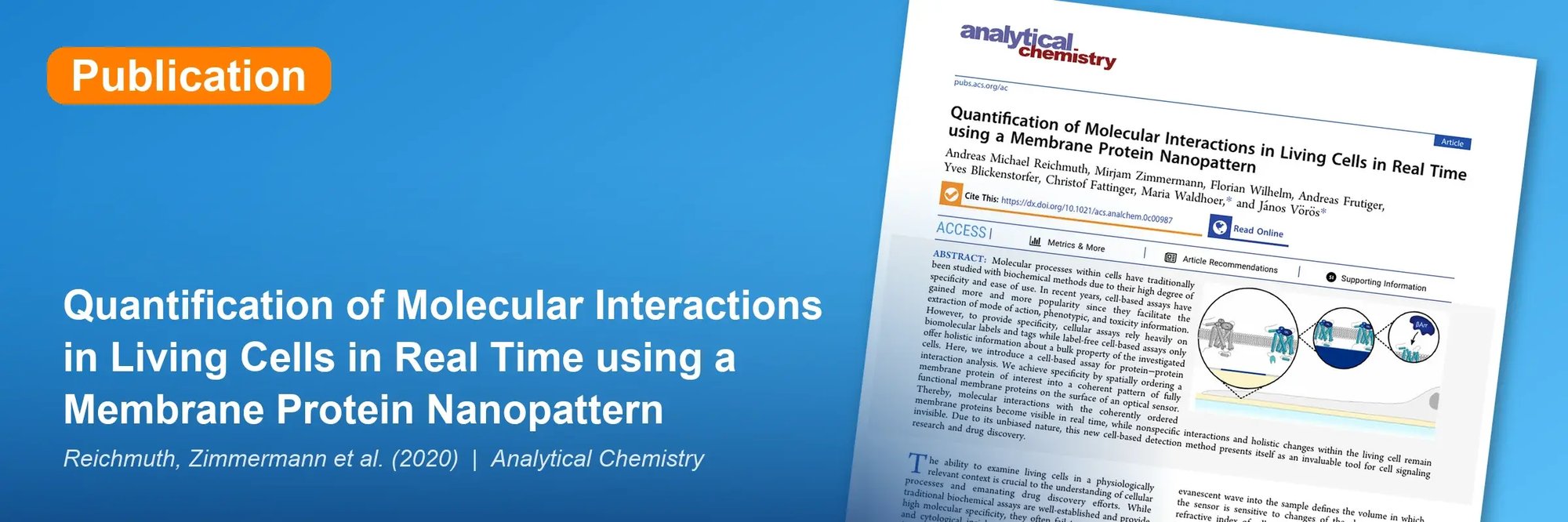
Cell-based focal molography enables real-time quantification of specific intracellular protein interactions at membrane receptors in living cells, free from interference by off-target signaling.
Understanding G protein-coupled receptor (GPCR) signaling requires monitoring specific molecular interactions at receptors in living cells. Conventional label-free biosensors such as SPR or BLI depend on laborious receptor preparation in artificial membrane mimetics (detergent micelles, nanodiscs, liposomes). That strips the receptor from its native lipid and protein environment and can distort its pharmacology. Fluorescence-based live-cell assays preserve context but require molecular modifications that can alter the biology being studied. Traditional label-free live-cell readouts cannot separate receptor-specific events from nonspecific cellular changes such as morphological shifts or off-target receptor activation.
Using focal molography, the authors created a transmembrane mologram by spatially arranging SNAP-tagged beta-2 adrenergic receptors (β2ARs) in the plasma membrane of HEK293 cells. The receptors self-assembled from the sensor chip surface into the cell membrane, forming a coherent nanopattern. This diffractive arrangement renders only target-receptor interactions visible while nonspecific cellular changes remain undetectable.
Why It Matters
This work extends focal molography from purified protein assays to living cells. It enables label-free, real-time monitoring of intracellular signaling events at specific membrane receptors in their native lipid and protein environment. By avoiding detergents, nanodiscs, and fluorescent labels, the method preserves the receptor pharmacology that reconstituted-system measurements often distort. It also resolves binding kinetics that endpoint or bulk readouts cannot. The same coherent-nanopattern strategy generalizes beyond β2AR to other GPCR subfamilies. It also applies to membrane protein classes such as ion channels, transporters, and receptor tyrosine kinases. For drug discovery teams investigating biased agonism, allosteric modulation, or partner-protein recruitment at specific receptors, this combines native-environment context, binding-kinetic resolution, and label-free specificity. Classical biochemical assays and bulk live-cell readouts cannot offer that combination.
Reichmuth, A. M., Zimmermann, M., Wilhelm, F., Frutiger, A., Blickenstorfer, Y., Fattinger, C., Waldhoer, M., & Voros, J. (2020). Quantification of Molecular Interactions in Living Cells in Real Time using a Membrane Protein Nanopattern. Analytical Chemistry, 92(13), 8983–8991. https://doi.org/10.1021/acs.analchem.0c00987



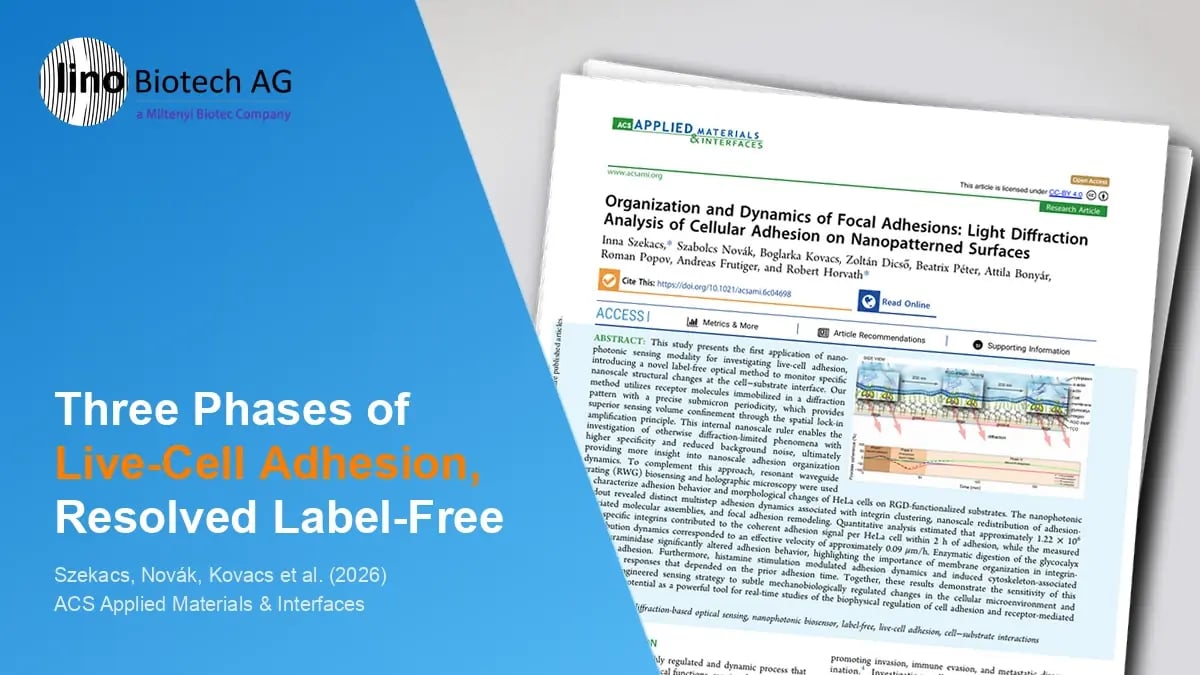 Jun, 2026
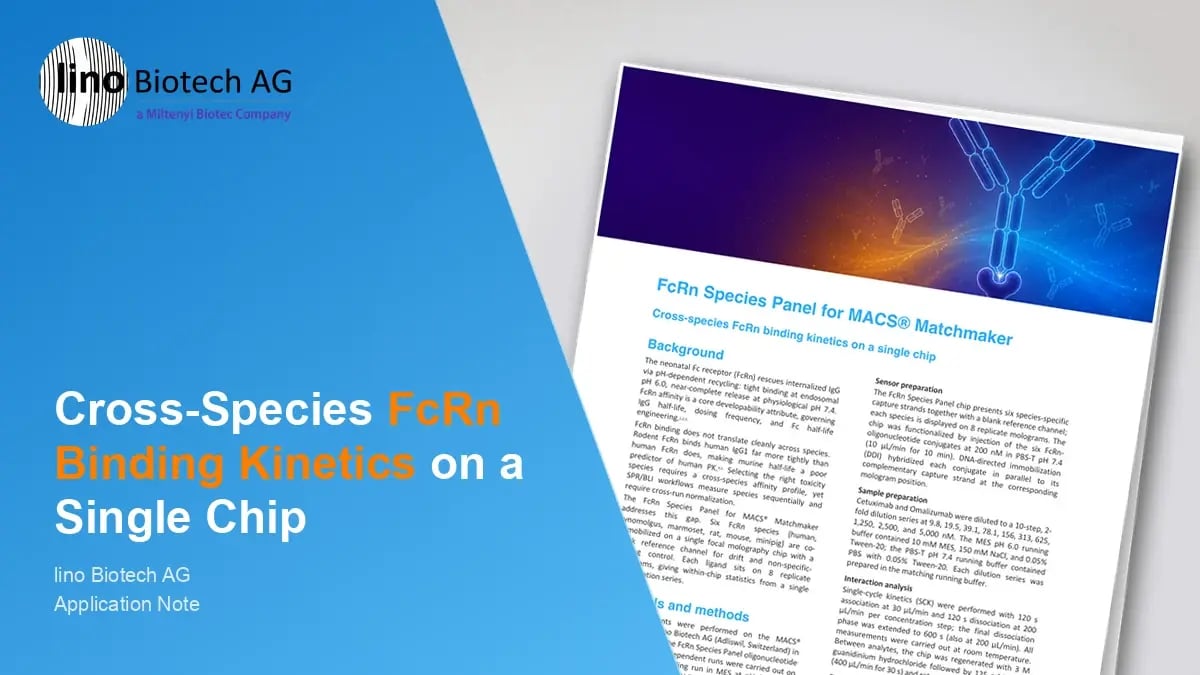 Jul 2026
 Jun, 2026