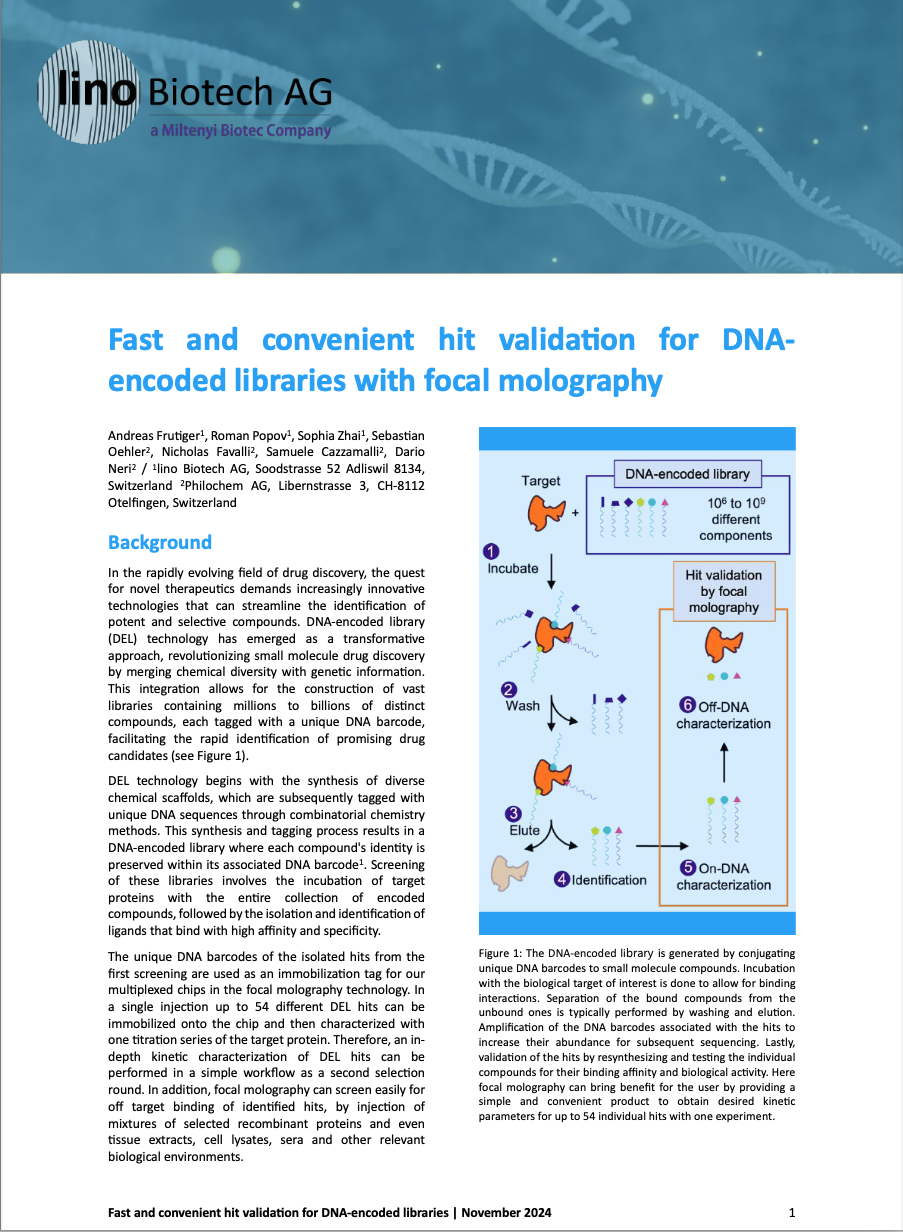
Drug discovery needs technologies that speed up the identification of potent and selective compounds. DNA-encoded library (DEL) technology changes small molecule drug discovery by merging chemical diversity with genetic information. This allows libraries of millions to billions of distinct compounds, each tagged with a unique DNA barcode. Promising drug candidates can then be identified quickly
DEL technology begins with the synthesis of diverse chemical scaffolds, which are subsequently tagged with unique DNA sequences through combinatorial chemistry methods. This synthesis and tagging process results in a DNA-encoded library where each compound's identity is preserved within its associated DNA barcode1. To screen such a library, the target protein is incubated with the entire collection of encoded compounds. Ligands that bind with high affinity and specificity are then isolated and identified.
The unique DNA barcodes of the hits from the first screening serve as immobilization tags for our multiplexed focal molography chips. In a single injection, up to 54 different DEL hits are immobilized on the chip. One titration series of the target protein then characterizes all of them. Therefore, an in-depth kinetic characterization of DEL hits can be performed in a simple workflow as a second selection round. In addition, focal molography screens easily for off-target binding of identified hits. Mixtures of selected recombinant proteins can be injected, and even tissue extracts, cell lysates, sera and other relevant biological media.



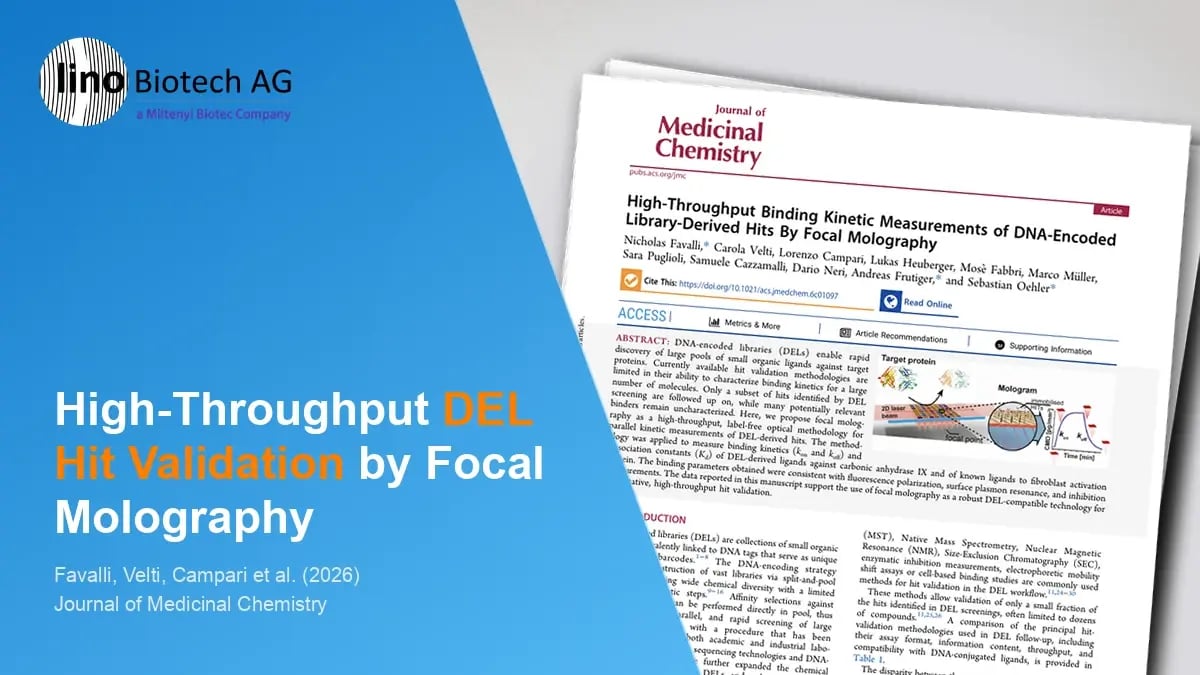 Jun, 2026
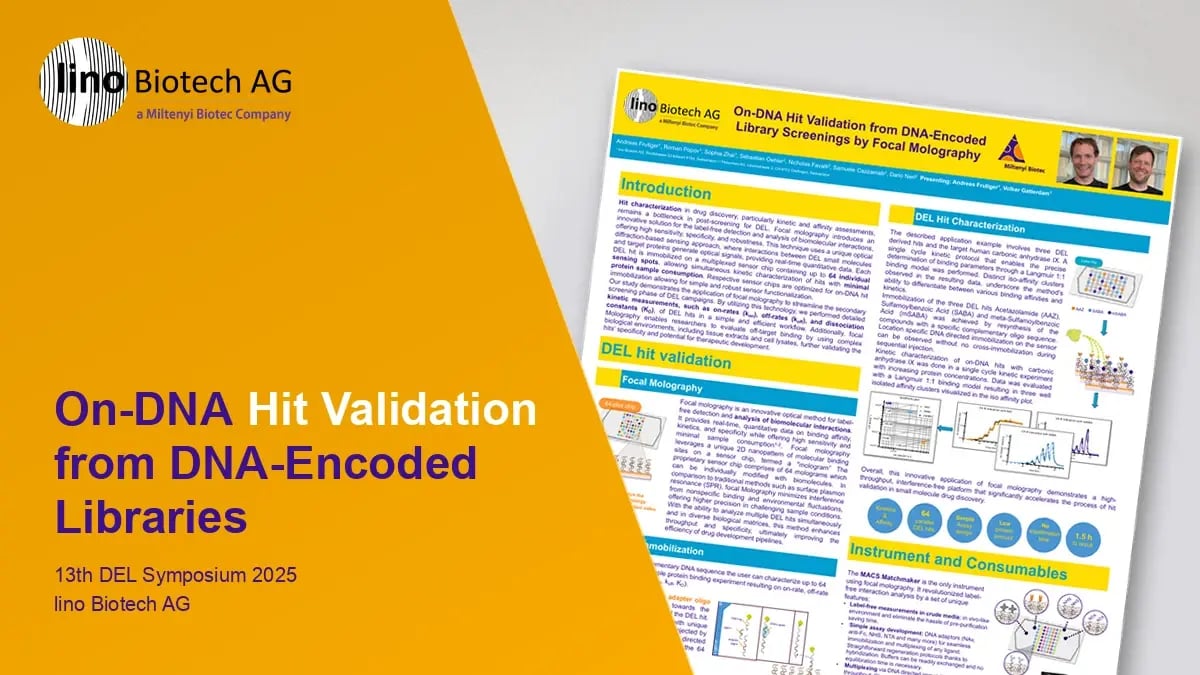 Aug 11, 2025
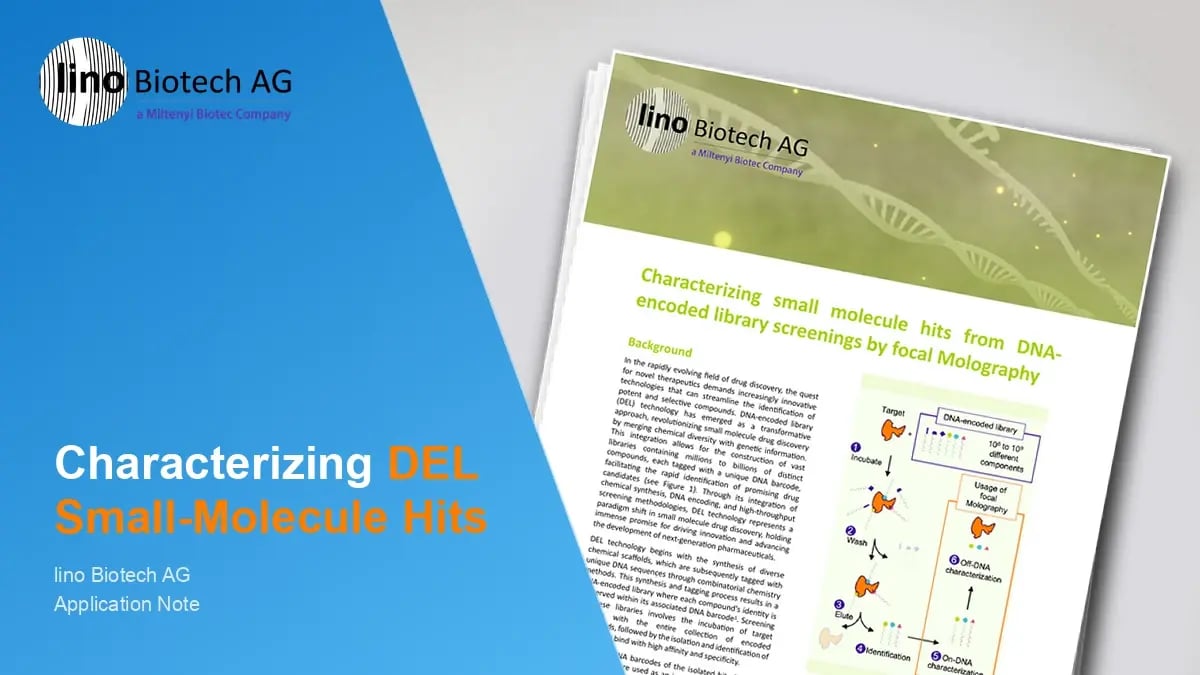 March, 2024