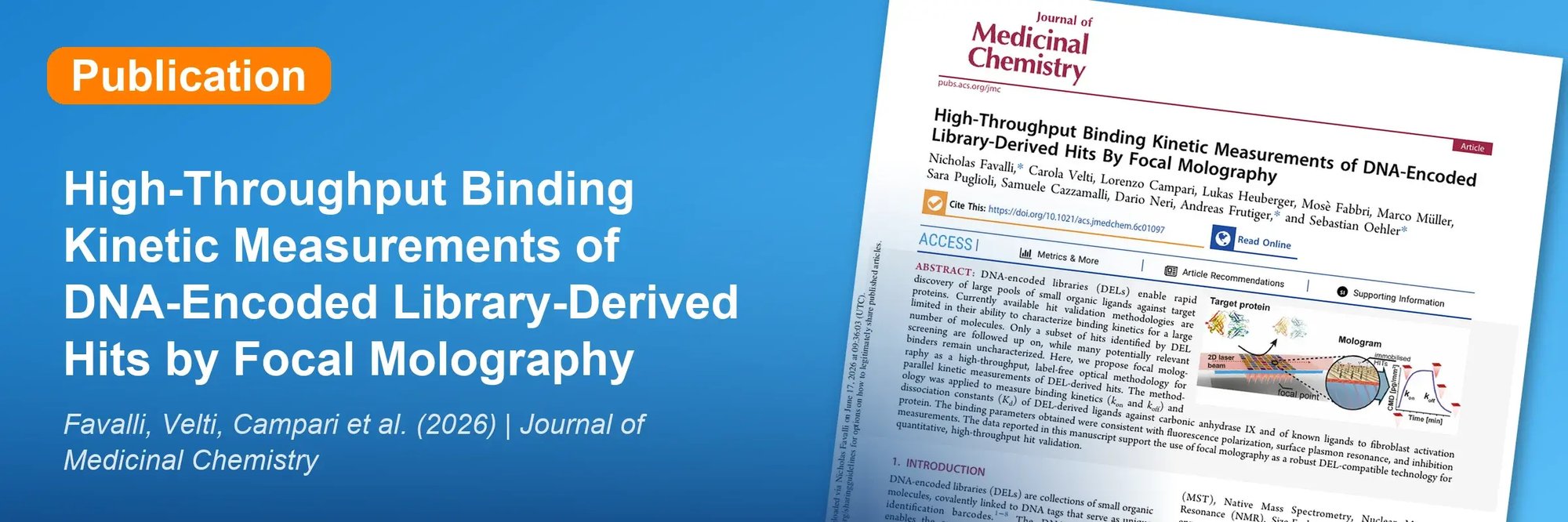
Focal molography enables high-throughput, label-free kinetic validation of DNA-encoded library (DEL) hits, measuring 24 compounds with subnanomolar accuracy.
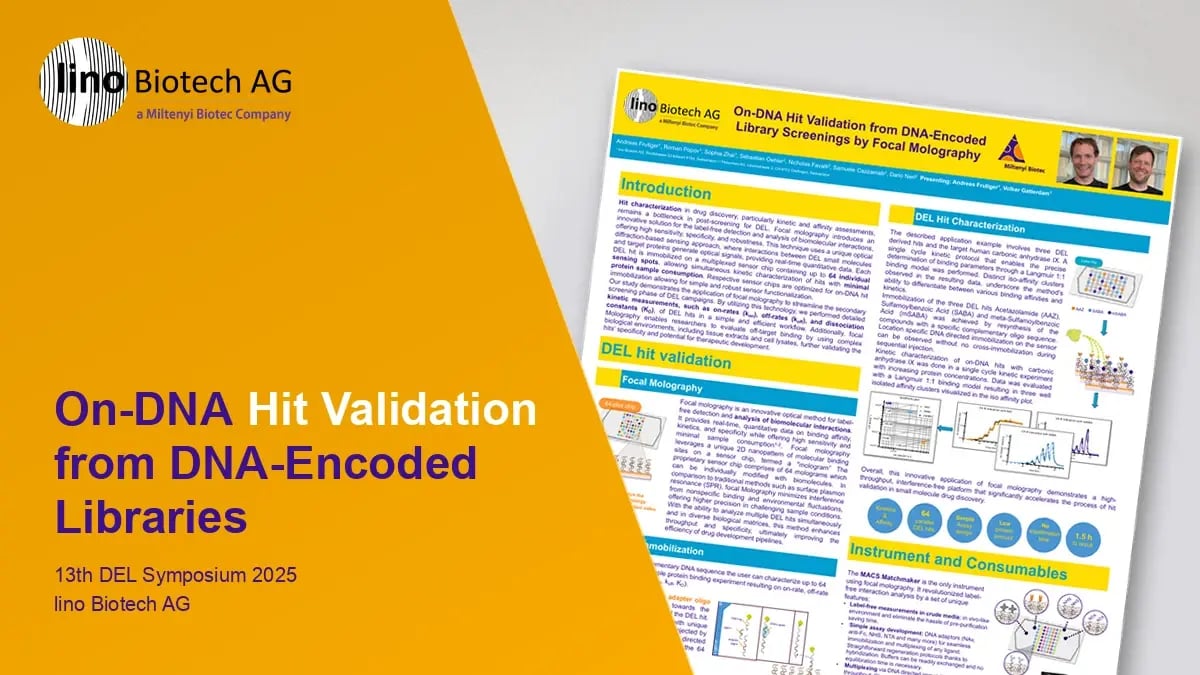
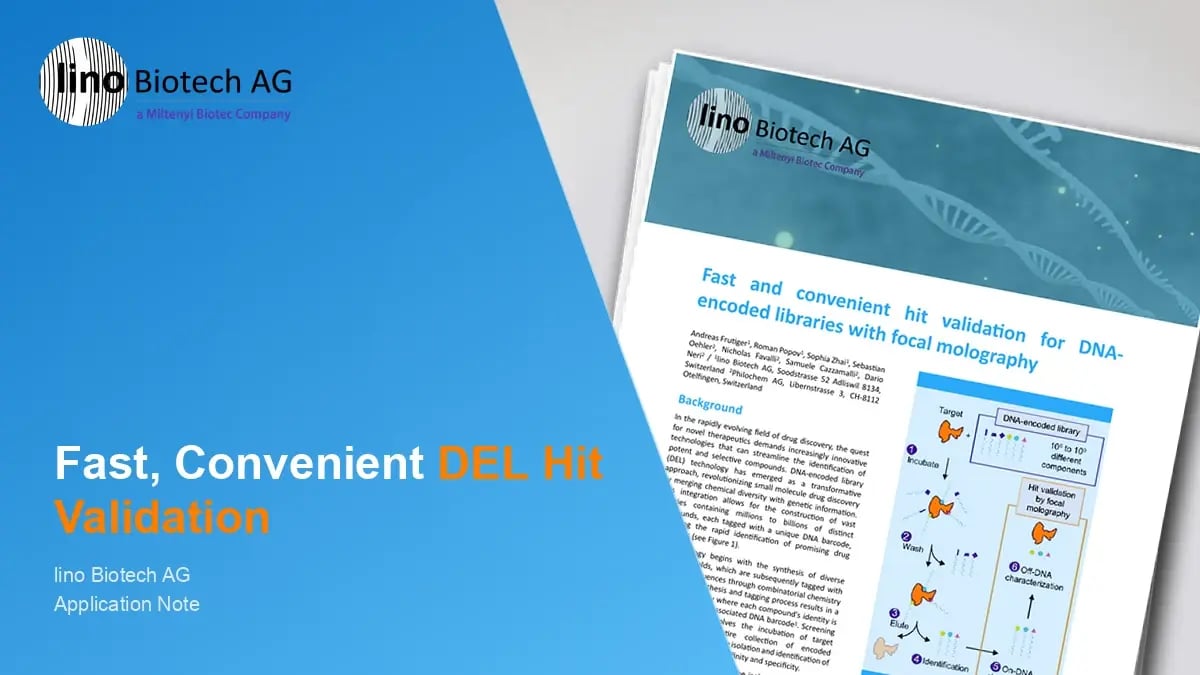
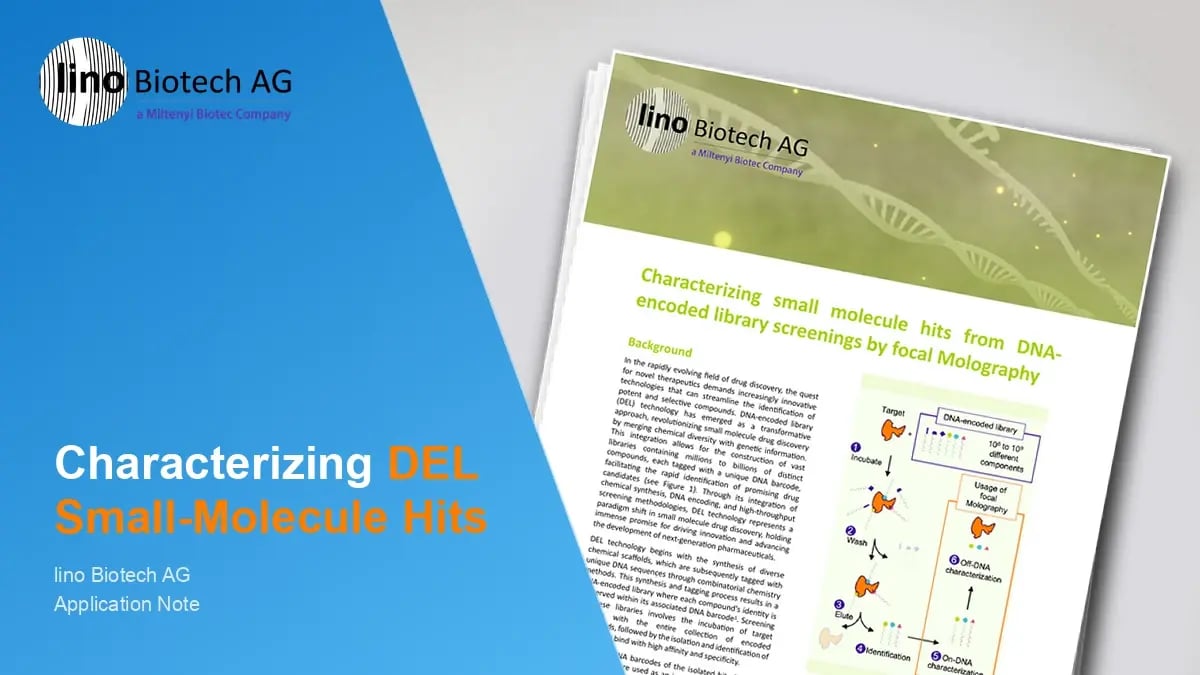
DNA-encoded libraries (DELs) let medicinal chemists screen millions to billions of compounds against a target in a single experiment. The bottleneck has shifted downstream. Established hit-validation methods such as surface plasmon resonance (SPR), fluorescence polarization (FP), and isothermal titration calorimetry (ITC) characterize only a fraction of the enriched compounds. Many potentially relevant binders therefore remain uncharacterized.
The authors used focal molography on the MACS® Matchmaker to measure binding kinetics of 24 DEL-derived hits. The targets were carbonic anhydrase IX (CAIX) and carbonic anhydrase II (CAII). Each hit was conjugated to a unique 20-mer DNA code and immobilized in parallel via DNA-directed immobilization (DDI) onto spatially encoded molograms. That enabled 18-plex single-cycle kinetic measurement on a single regenerable chip.
Why It Matters
Hit validation is the central bottleneck in DEL campaigns: screening can produce thousands of enriched compounds, yet downstream characterization is slow and material-intensive. Focal molography closes this gap by combining label-free quantitative kinetics with multiplexed throughput. Medicinal chemists can triage and rank DEL hits at the scale modern library outputs demand.
Favalli, N.; Velti, C.; Campari, L.; Heuberger, L.; Fabbri, M.; Müller, M.; Puglioli, S.; Cazzamalli, S.; Neri, D.; Frutiger, A.; Oehler, S. High-Throughput Binding Kinetic Measurements of DNA-Encoded Library-Derived Hits by Focal Molography. Journal of Medicinal Chemistry 2026. https://doi.org/10.1021/acs.jmedchem.6c01097



 Aug 11, 2025
 Nov, 2024
 March, 2024