Understanding biomolecular interactions is vital for biological research, revealing the core mechanisms behind cellular functions. These interactions, involving proteins, nucleic acids, lipids, and carbohydrates, are central to gene expression, signal transduction, immune responses, and metabolic regulation.
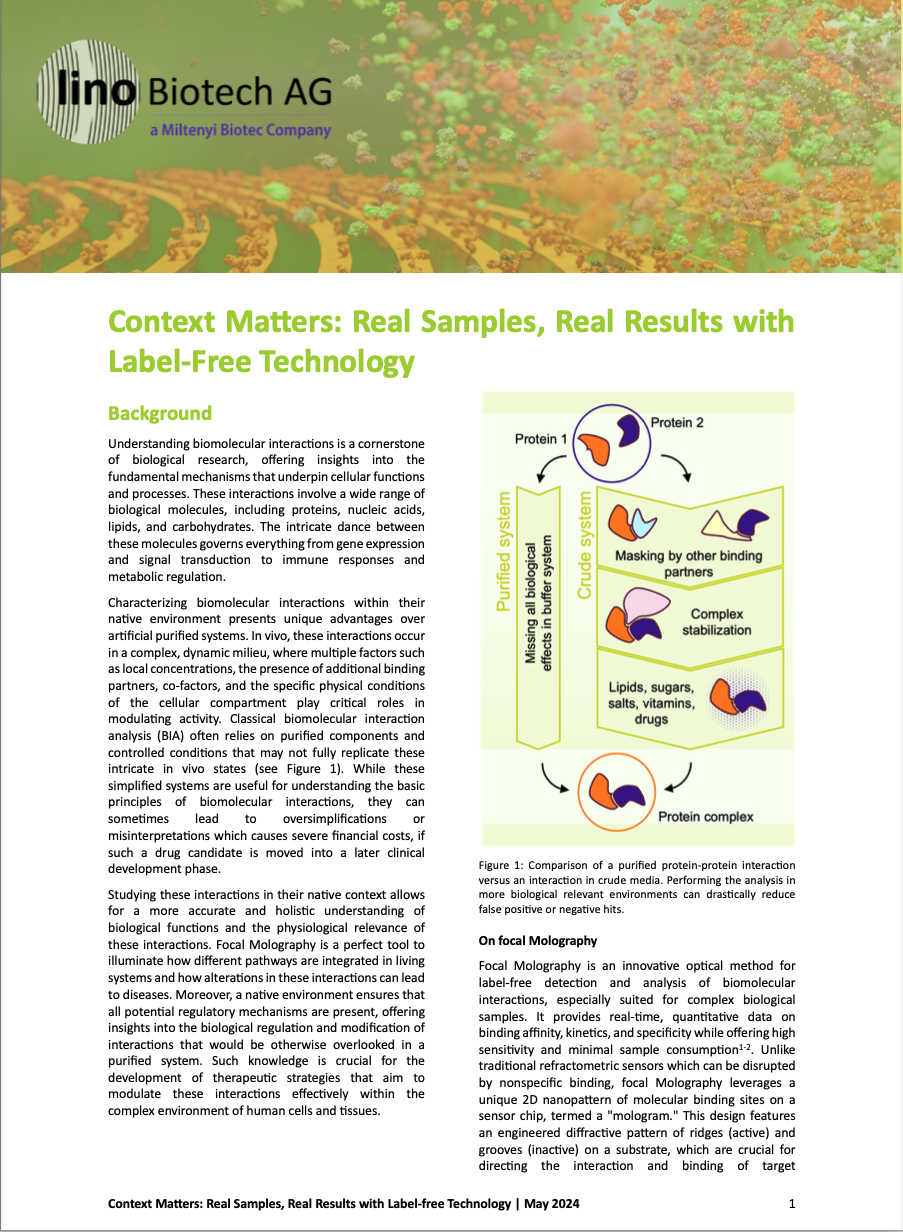
Analyzing these interactions in their natural environment offers significant benefits compared to artificial, purified systems. In vivo, they occur in a complex, dynamic setting. Local concentrations, additional binding partners, and physical conditions all modulate their activity. Traditional biomolecular interaction analysis relies on purified components and often misses these in vivo states. That leads to misinterpretations and financial risks in drug development.
Studying interactions in their native context provides a comprehensive understanding of biological functions and their physiological relevance. Focal Molography helps explore how pathways integrate in living systems and how changes in these interactions can cause diseases. This approach ensures that all regulatory mechanisms are considered, offering deeper insights into biological regulation and interaction modification that could be missed in simplified systems. This knowledge is critical for developing therapies that effectively target these interactions in the complex human cellular and tissue environment.



 May 28, 2026
 Nov 11, 2025
 Sep, 2025