


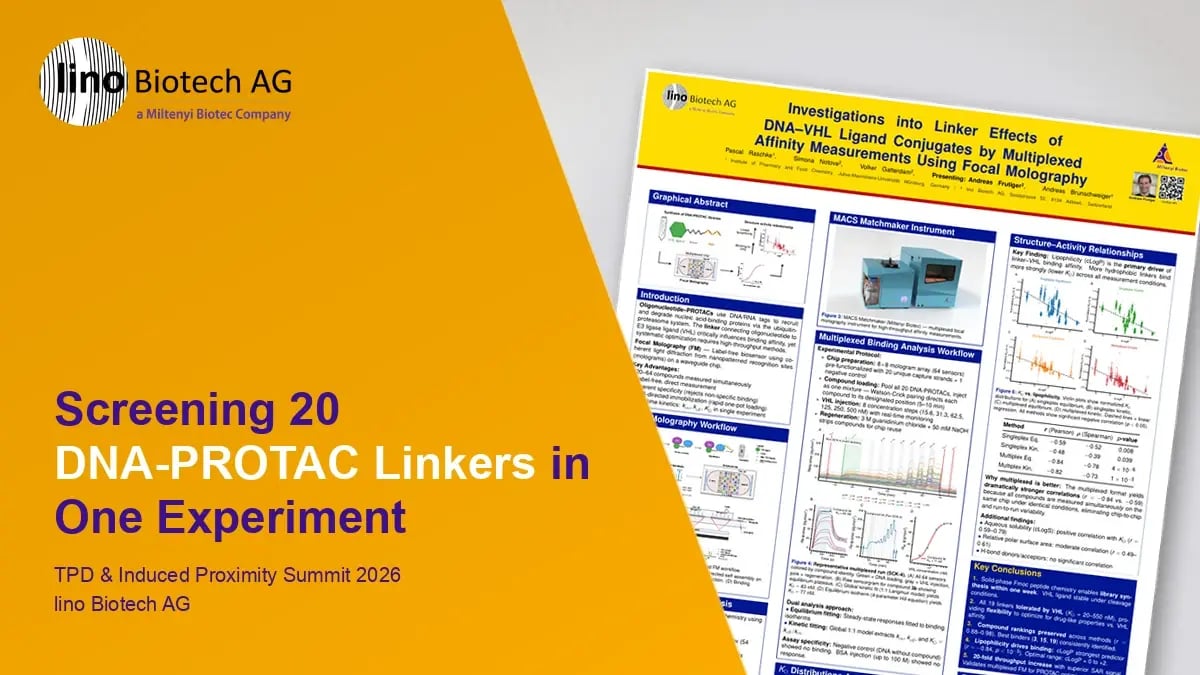
Multiplexed focal molography measured the VHL binding of 20 DNA-PROTAC conjugates in one experiment and showed that linker lipophilicity drives affinity. This poster was presented at the 6th TPD & Induced Proximity Summit Europe in London, UK (March 10 to 12, 2026).
The Challenge: Optimizing Linkers in Oligonucleotide PROTACs
Oligonucleotide proteolysis-targeting chimeras (PROTACs) use a DNA or RNA tag to recruit and degrade nucleic acid-binding proteins. The linker to the ligand of the E3 ligase VHL influences binding affinity. Testing linkers systematically needs a method with high throughput.
The Approach: A 20-Plex DNA-PROTAC Library on One Sensor Chip
Nineteen diverse linkers were built by solid-phase Fmoc peptide chemistry, covering a cLogP (calculated lipophilicity) from −2.5 to +3.2. A pool of 20 compounds was injected once. DNA-directed immobilization (DDI) sorted it onto a sensor chip with 64 molograms in 5 to 10 minutes. The results were compared with singleplex measurements using kinetic and equilibrium fitting.
Key Results for Linker Effects on VHL Binding
- Linker tolerance: all 19 linkers were tolerated by VHL, with KD values from 20 to 550 nM.
- Lipophilicity: cLogP was the strongest predictor of affinity (r = −0.84, p < 10−5), and more hydrophobic linkers bound more strongly.
- Multiplexed against singleplex: correlation with cLogP reached r = −0.84 multiplexed against −0.59 singleplex, because all compounds shared one sensor chip and identical conditions.
- Consistent ranking: compound rankings held across methods (r = 0.88 to 0.98), and compounds 3, 15 and 19 bound most strongly.
- Example: compound 3b gave a KD of 83 nM by kinetic fit and 77 nM by equilibrium fit.
- Specificity: DNA without compound showed no binding, and BSA injection showed no response.
Why It Matters for PROTAC Optimization
The multiplexed format gave a 20-fold higher throughput than singleplex, and mild regeneration allowed the sensor chip to be reused. Researchers can choose linkers for drug-like properties and still keep VHL affinity. The poster names on-DNA hit validation and oligonucleotide therapeutics as further uses.
More resources
 Oct 2026
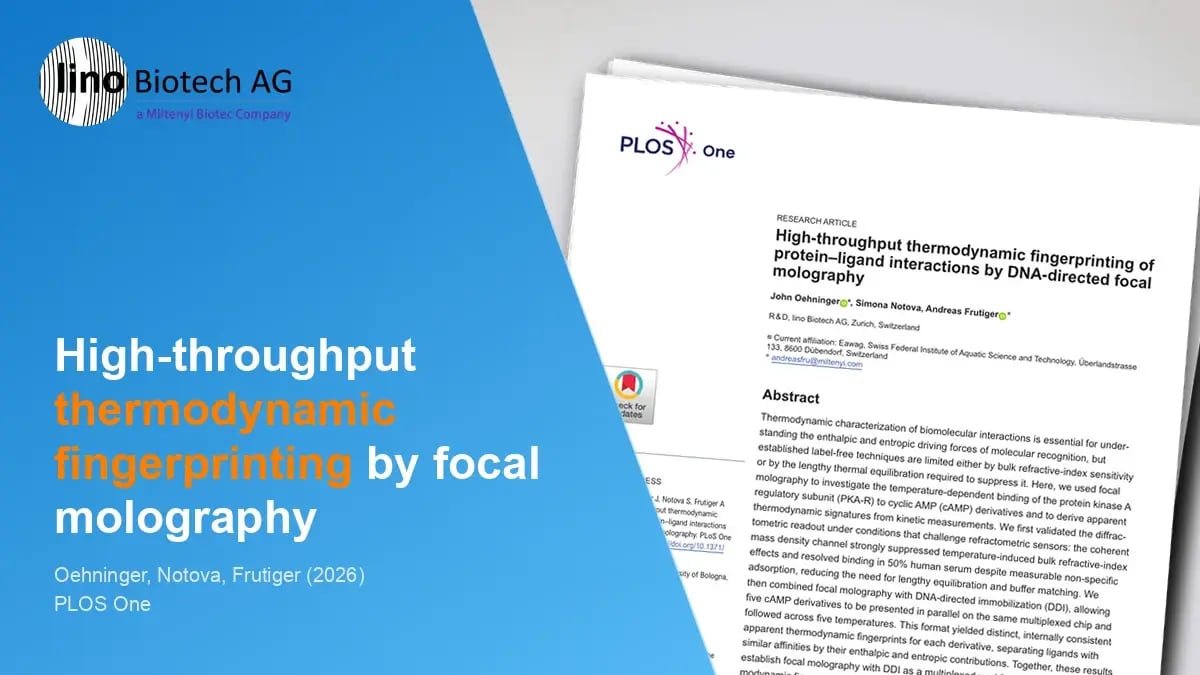
High-throughput thermodynamic fingerprinting of protein–ligand interactions by DNA-directed focal molography
Oehninger, J., Notova, S., & Frutiger, A. (2026). PLOS One, 21(10), e0354008. https://doi.org/10.1371/journal.pone.0354008
Download after a short form
 Oct 2026
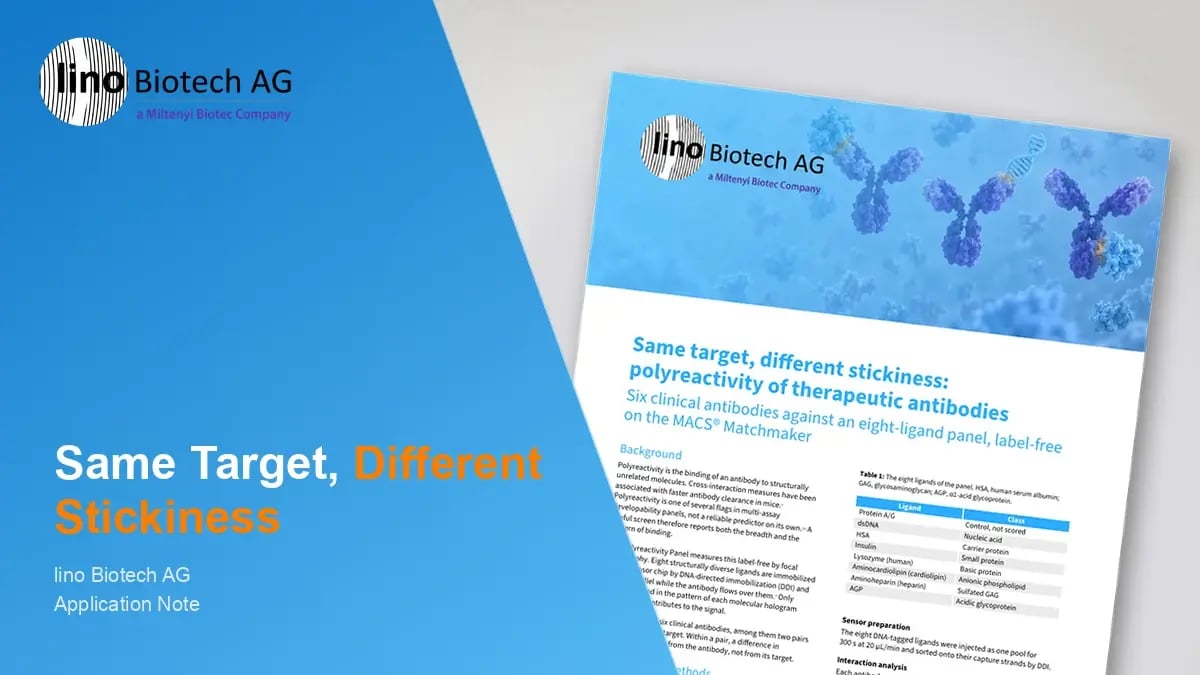
Same target, different stickiness: polyreactivity of therapeutic antibodies
Six clinical antibodies, including two same-target pairs, ranked by polyreactivity against an eight-ligand panel on one focal molography chip. Briakinumab scored 69-fold above ...
Download after a short form
 Oct 2026
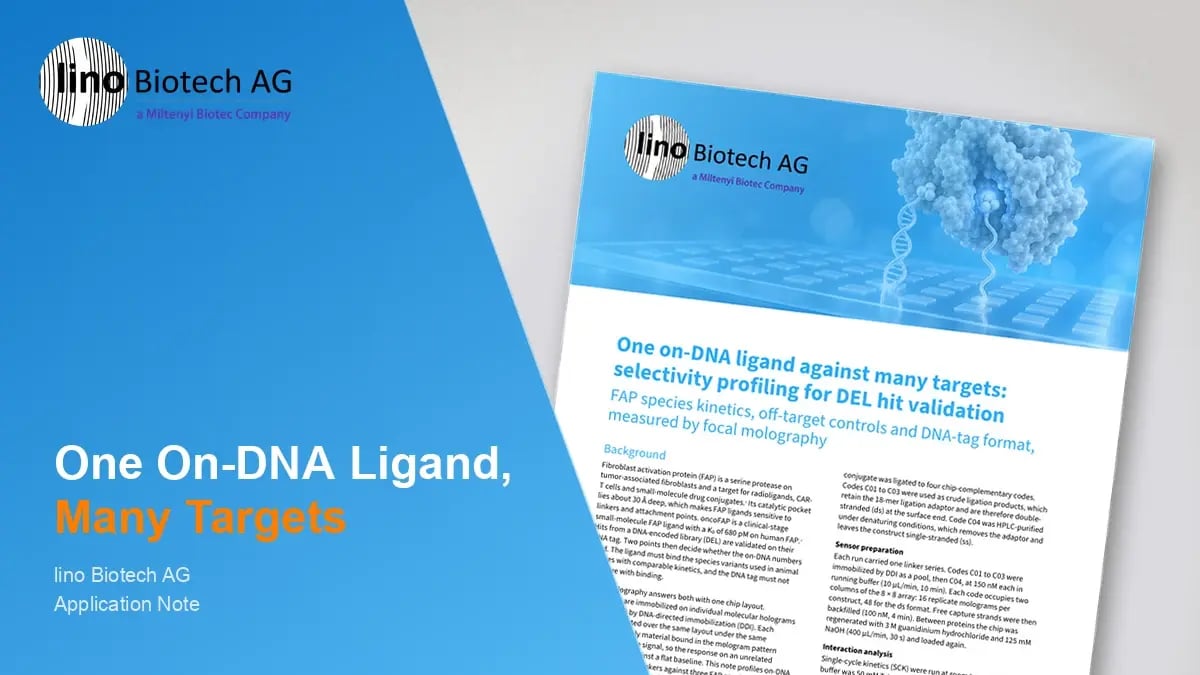
One on-DNA ligand against many targets: selectivity profiling for DEL hit validation
On-DNA oncoFAP profiled against human, mouse and canine FAP and five unrelated proteins on one focal molography chip layout. Full kinetics on every species variant, flat responses ...
Download after a short form